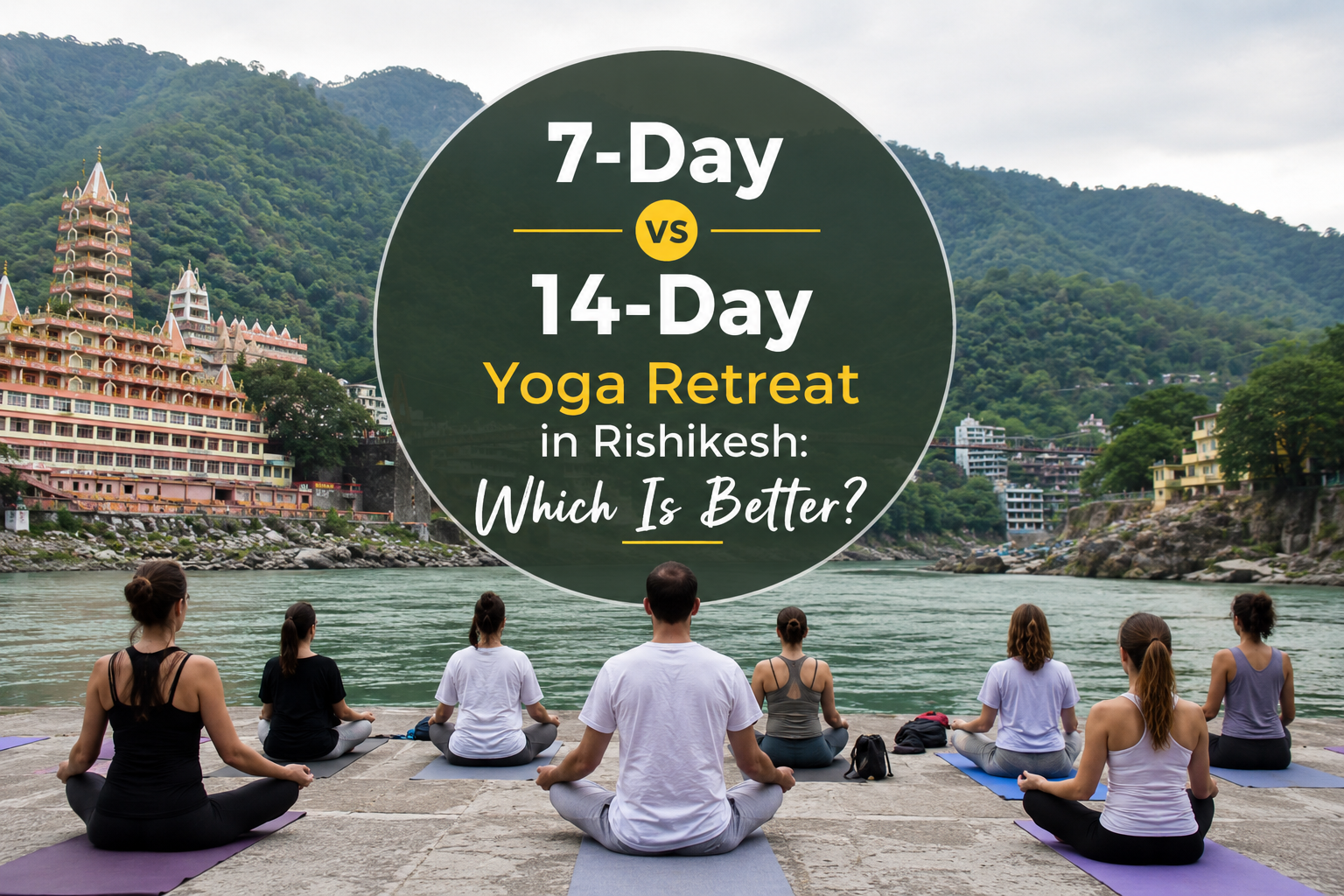
How to Choose A 7- Day Or 14- day Yoga Retreat, in Rishikesh When you’re faced with both a 7-day and a 14- day yoga retreat in Rishikesh, each with a promise of relaxation, self-reflection, developing better habits and increasing intimacy with yourself, you may be uncertain which to choose. However, the answer depends less on which retreat is "better" and more on the specific outcomes you're hoping for from your time away in Rishikesh. A 14- day yoga retreat allows you more space and time to get acquainted with a fixed routine, practice spiritual discipline. and meditation to a deeper level and generally engage in a more sustained wellness experience.
If you are pressed for time, however, or even have simply never attended a yoga retreat before, a 7 day Yoga retreat can be the perfect opportunity.
Here’s our comparison between 7 day & 14 Day retreats.
| S.No. | Table of Contents |
|---|---|
| 1 | What Is a Yoga Retreat in Rishikesh? |
| 2 | 7-Day vs 14-Day Yoga Retreat: Quick Comparison |
| 3 | What to Expect from a 7-Day Yoga Retreat in Rishikesh |
| 4 | What to Expect from a 14-Day Yoga Retreat in Rishikesh |
| 5 | 7-Day vs 14-Day Yoga Retreat: Key Differences |
| 6 | Which Retreat Is Better for Beginners? |
| 7 | Which Retreat Is Better for Deep Relaxation and Wellness? |
| 8 | Which Retreat Is Better for Spiritual Growth? |
| 9 | Can You Combine Yoga With Ayurveda? |
| 10 | How to Choose the Right Retreat Duration |
| 11 | What Should You Look for in the Best Yoga Retreat in Rishikesh? |
| 12 | 7-Day vs 14-Day Yoga Retreat: Which Is Better? |
| 13 | Frequently Asked Questions |
What Is a Yoga Retreat in Rishikesh?
It's not simply about heading to a beautiful location for spiritual discipline classes; rather a structured plan that generally includes yoga, meditation, pranayama, mindful eating and living, and opportunities for personal time and reflection.
For those seeking something different from a regular holiday, Shrike is an ideal location as it provides a setting of spiritual development alongside the river Ganga, an opportunity to engage with traditional spiritual discipline, and a pace of life that allows one to reconnect with their physical and mental well-being.
It may also include sessions in meditation, yoga philosophy, time spent in nature, experiences of Indian culture or holistic well-being procedures in line with Ayurvedic principles depending on the retreat, although time is a crucial factor in not only getting the time to attend the classes, but the flexibility and ability to adapt to the new regime, disengage from day-to-day activities and integrate all that the retreat offers into your life.
7-Day vs 14-Day Yoga Retreat: Quick Comparison
| Factor | 7-Day Yoga Retreat | 14-Day Yoga Retreat |
|---|---|---|
| Duration | One week | Two weeks |
| Best for | First-time retreat guests and busy travelers | Deeper immersion and extended wellness |
| Time commitment | Moderate | Higher |
| Routine building | Good starting point | More time for consistency |
| Yoga practice | Introduction and regular practice | Longer and potentially deeper practice |
| Meditation | Regular introduction | More time for sustained practice |
| Personal reflection | Moderate | Greater opportunity |
| Ayurveda integration | May be available | More time for an extended experience |
| Travel planning | Easier for short holidays | Requires more planning |
| Travel planning Best suited to | Reset, relaxation, exploration | Immersion, lifestyle reset, deeper personal work |
There is no universal winner. Your ideal choice depends on how much time you have and what you want from the retreat.
What to Expect from a 7-Day Yoga Retreat in Rishikesh
A 7-day retreat can provide enough time to step away from your normal schedule and experience a structured wellness routine.
During one week, you may have the opportunity to practice yoga regularly, learn breathing techniques, meditate, eat mindfully, and spend time away from everyday distractions.
A Typical 7-Day Retreat Experience
Your schedule will vary depending on the retreat provider, but a week-long experience may include:
Morning yoga and meditation
Pranayama or breathwork
Yoga philosophy or mindfulness sessions
Healthy and balanced meals
Time for rest and personal reflection
Evening meditation or relaxation practices
Nature walks or local excursions
Opportunities to experience the spiritual side of Rishikesh
The biggest advantage of seven days is balance. You get enough time to experience retreat life without making a two-week commitment.
Who Should Choose a 7-Day Retreat?
You should book a 7-day yoga retreat if:
It’s your very first yoga retreat.
Your schedule doesn’t allow for longer trips.
You’re seeking stress-relief or a way to disconnect.You wish to ‘test the waters’ of yoga with a short stay.
It’s about finding short-term relief through wellness.
You wish to be surrounded by Indian spirituality and relaxation, while also touring.
Often for first-timers, a week is a comfortable amount of time.
For many first-time visitors, one week offers a comfortable introduction to the retreat environment.
What to Expect from a 14-Day Yoga Retreat in Rishikesh
A 14-Day yoga retreat in Rishikesh means twice the time to settle into a retreat program. You do not use up a few periods 'getting into the flow of things ' only to have to say goodbye. Two weeks means you are not rushed through your program.
Extra time can be allotted for meditation, yoga, relaxation, and included therapeutic activities.
This length of yoga retreat also allows you more room to explore areas of the retreat program as opposed to packing it all into a one week, short retreat.
What Can a 14-Day Retreat Include?
Depending on the programme, a two-week retreat may include:
Daily yoga sessions
Pranayama and meditation
Yoga philosophy
Mindfulness practices
Sattvic or wellness-focused meals
Relaxation and restorative practices
Ayurveda-inspired wellness activities
Nature experiences
Cultural and spiritual excursions
Personal reflection time
The exact schedule and inclusions differ between retreat providers, so it is important to check the programme before booking.
Who Should Choose a 14-Day Yoga Retreat?
A 14-Day Yoga Retreat can be especially suitable if you:
I want a longer break from a demanding routine.
Have enough time for a two-week stay.
I want to establish a consistent daily practice.
Are interested in deeper self-reflection.
I want to combine yoga, meditation, and wellness practices.
Prefer an immersive retreat rather than a short getaway.
I want more time to explore Rishikesh at a relaxed pace.
Longer retreats are also useful for travelers who do not want their entire experience to feel rushed.
7-Day vs 14-Day Yoga Retreat: Key Differences
1. Time for Adjustment
The first few days are always about acclimatizing to the new schedule, diet, surroundings and activities when you enter a retreat. Seven days will be, for a good proportion, getting used to the retreat. 14 days offers far more time to settle in and relax.
2. Building a Consistent Routine
A retreat brings the comfort of structure and routine into your days. Seven days can give you the feel for that structure, but fourteen can really help it all sink in – repetition with the extras, which makes it feel even more full immersion for anyone trying to cultivate the habit.
3. Depth of Experience
A week can give you a meaningful introduction to retreat life.
Two weeks, however, provide more room for exploration.
You may have additional time to attend different sessions, reflect on what you are learning, enjoy quiet periods, and explore the spiritual environment of Rishikesh without rushing from one activity to another.
4. Flexibility
Seven days is easily accommodated even in a full life schedule.
Fourteen days means a larger displacement from work, family, and obligations. However, it also means a bigger shift away from ordinary life.
5. Cost and Travel Planning
14-day retreats mean you are typically longer in the destination and this leads to a wider range in prices for accommodation, food, travel and programme costs.
Nevertheless, just don't compare retreat prices by the duration, rather ask what services are to be received, from accommodation, food, sessions, excursions, therapies, etc.
Which Retreat Is Better for Beginners?
If it is your very first time on any retreat then a 7-day is probably going to be easier as you can ease in. You have plenty of time to understand the day to day routine and what is happening during your retreat without being committed for two weeks initially.
However just because you have no experience it does not mean that a 14 day is going to be outside the realm of possibility for you; if your calendar is available and you want the total and complete experience that a 14 day Yoga Retreat can offer.
The better question is:
Do you want to test the retreat experience, or are you ready to immerse yourself in it?
Choose seven days if you want to explore. Choose fourteen days if you already know that you want a longer wellness journey.
Which Retreat Is Better for Deep Relaxation and Wellness?
Both options are effective in helping you relax and recharge. However, they offer different kinds of experiences. A 7-day retreat may be good if you’re looking for something to detach yourself from your normal life. A week at a retreat center, you do your best to unplug from distractions for a concentrated period, dedicated to your wellbeing.
If you are a slower traveler and need a little more time to settle into the atmosphere, you may wish to find a longer retreat.
A 14-day retreat will provide more flexibility. 7-days feel quite rushed to try and integrate everything into it. At the same time as a two-week retreat, they allow more breathing space in between practice sessions. For the person seeking a wellness retreat in Rishikesh where they want a balance of structured practice with space for downtime, this offers an appealing package.
Which Retreat Is Better for Spiritual Growth?
Yoga, meditation, spiritual awakenings, or any sort of self exploration that you might desire to seek have always enticed visitors to Rishikesh.
If any such journeying and quest are your main interests then extending your retreat is likely to open up this experience with more time for discovery.
A 14-day programme can allow you to:
Spend more time in meditation.
Explore yoga philosophy at a comfortable pace.
Develop greater familiarity with your daily practice.
Spend more time in silence and reflection.
Experience Rishikesh beyond conventional sightseeing.
Create space for personal introspection.
That’s not to say that seven days couldn’t possibly offer spiritual growth. You may well find intention, openness, support and consistency in far fewer days!
If you are an adventurer, for whom a spiritual retreat in India beckons, Rishikesh would perhaps suit. Daily reflection and meditation may become the anchors of your travelling journey.
Can You Combine Yoga With Ayurveda?
Yes. Some retreats combine meditative practice with Ayurveda-based wellness practices.
You might expect traditional Ayurvedic consultation, dietary recommendations, treatments, meditation and yoga at an Ayurveda retreat in Rishikesh, but it really depends on the program. If you opt for a longer stay, this might be beneficial in situations where the programs are centered on a multi-day lifestyle program. Take for instance an Ayurveda retreat that offers a choice between 7-day and 14-day program options.
If you choose the latter, you are likely to have more time to benefit from the arranged experience.
Remember, Ayurveda programs can be very diverse. If Ayurveda is a primary purpose of your trip to Shrike, consider practitioners' credentials, treatments included, accommodation, food, consultation, the program, etc. before making your booking.
How to Choose the Right Retreat Duration
Before booking your retreat, ask yourself these questions.
How Much Time Do I Have?
If you have only a week available, a 7-day retreat is the obvious practical choice.
If you can comfortably spend two weeks away, a 14-day programme gives you more time to immerse yourself.
What Is My Main Goal?
Your goal should influence your choice. Choose 7 days if your goal is: Relaxation A short break Stress management Trying retreat life Exploring yoga A quick wellness reset Choose 14 days if your goal is: Deeper immersion Establishing a routine Extended meditation practice More personal reflection A longer wellness journey Combining multiple retreat practices
Am I Comfortable With a Structured Schedule?
Retreats often follow a planned daily routine. Before booking a longer programme, make sure you are comfortable spending several days following a structured schedule.
Do I Want a Retreat or a Holiday?
This is an important distinction.
If you want plenty of free time for sightseeing, cafés, shopping, and independent travel, seven days may give you a better balance.
If your priority is retreat life itself, fourteen days can offer greater immersion.
What Should You Look for in the Best Yoga Retreat in Rishikesh?
The best yoga retreat in Rishikesh is not necessarily the most expensive or the longest one.
Look for a programme that matches your goals and clearly explains what you will receive.
Check the Programme Structure
Look for details about: Daily yoga sessions Meditation and pranayama Rest periods Meals Accommodation Wellness activities Excursions Group size Teacher experience
Check the Accommodation
Accommodation could play a vital part in your retreat experience.
If you're hoping for a solitary experience, then see if there are any private rooms offered. Don't expect all retreats to offer the same standard of accommodation if this is crucial to your experience.
A person looking to find the greatest hotels in Rishikesh might have their own particular priorities about where the hotel is located, and indeed how luxurious they are; however a person on a retreat might regard teacher expertise, food, program content, and general calm far more.
Consider the Location
Rishikesh has several popular areas, including Tapovan and locations around the Ganga.
Think about whether you want to stay close to cafés and shops or prefer a quieter environment where you can focus on your retreat.
Read What Is Actually Included
Before booking, check whether the price includes:
Accommodation
Meals
Yoga sessions
Meditation
Ayurveda or wellness therapies
Excursions
Transfers
Additional activities
A lower advertised price may not represent the final cost if important services are excluded.
7-Day vs 14-Day Yoga Retreat: Which Is Better?
So, which one should you choose?
A 7-day yoga retreat is better if you want a shorter, practical introduction to retreat life, need a quick wellness reset, or have limited time.
A 14-day yoga retreat is better if you want deeper immersion, more time to establish a routine, extended personal reflection, and a longer wellness experience.
The extra week may become beneficial if you, as a traveler, are specifically interested in a 14-Day Yoga Retreat as that gives your week an extra bit of breathing space and an extra time for you to move into experiencing and going beyond the 7 Days.
Duration is obviously a good deciding factor, a well planned 7-day yoga retreat is always better than a badly planned 14 DayYoga Retreat, so look at the teachers,schedule, accommodation, food,group size, the style, and what practice comes with it and everything else to support.
Quick Decision Guide
Choose 7 days when:
You are new to retreats, have limited time, or want a short wellness break.
Choose 14 days when:
You want a deeper experience, have sufficient time, and are ready to make retreat practices a bigger part of your daily routine.
Ultimately, the better retreat is the one that matches your time, intention, experience level, and wellness goals.
Frequently Asked Questions
Is a 14-Day Yoga Retreat better than a 7-day retreat?
Not necessarily. A 14-day retreat offers more time for immersion and routine-building, while a 7-day retreat is more convenient and can provide a meaningful introduction to retreat life.
Is 7 days enough for a yoga retreat in Rishikesh?
Yes. Seven days can provide enough time to experience regular yoga, meditation, mindful routines, healthy food, and the retreat environment without requiring a long stay.
Who should choose a 14-Day Yoga Retreat?
A 14-Day Yoga Retreat may suit people who have enough time for a longer stay and want deeper immersion in yoga, meditation, wellness, and personal reflection.
Can beginners join a 14-day yoga retreat?
Many retreats welcome beginners, but eligibility and practice intensity vary. Always check the programme requirements before booking.
Can I combine Ayurveda with a yoga retreat in Rishikesh?
Yes. Some programmes combine yoga, meditation, Ayurveda, wellness treatments, and mindful nutrition. The exact combination depends on the retreat provider.
Is Rishikesh good for a spiritual retreat in India?
Rishikesh is a popular destination for people seeking yoga, meditation, spiritual practices, and wellness experiences. The Ganga, Himalayan setting, temples, ashrams, and established yoga traditions contribute to its appeal.
What is the difference between a yoga retreat and a wellness retreat in Rishikesh?
A yoga retreat usually places yoga practice at the center of the programme, while a wellness retreat may combine several elements such as yoga, meditation, Ayurveda, nutrition, relaxation, and other holistic activities.
Final Thoughts
The choice between a 7-day and a 14-day Shrike Yoga retreat relies entirely on what you’re after. For a quick and refreshing reset and without having to take extensive leave from work and commitments, a 7-Day Yoga Retreat could be your way to experience focused and intensive practice. Should you be looking for a slower pace and to develop and solidify a healthier and more present daily ritual and reflection – the 14-day Shrike Yoga retreat would likely be beneficial?
With any retreat in India or elsewhere, ensure that you have a reasonable expectation going forward.
The true aim of these courses is not the number of days you spend here on the retreat, but the richness with which you approach each and every single day.