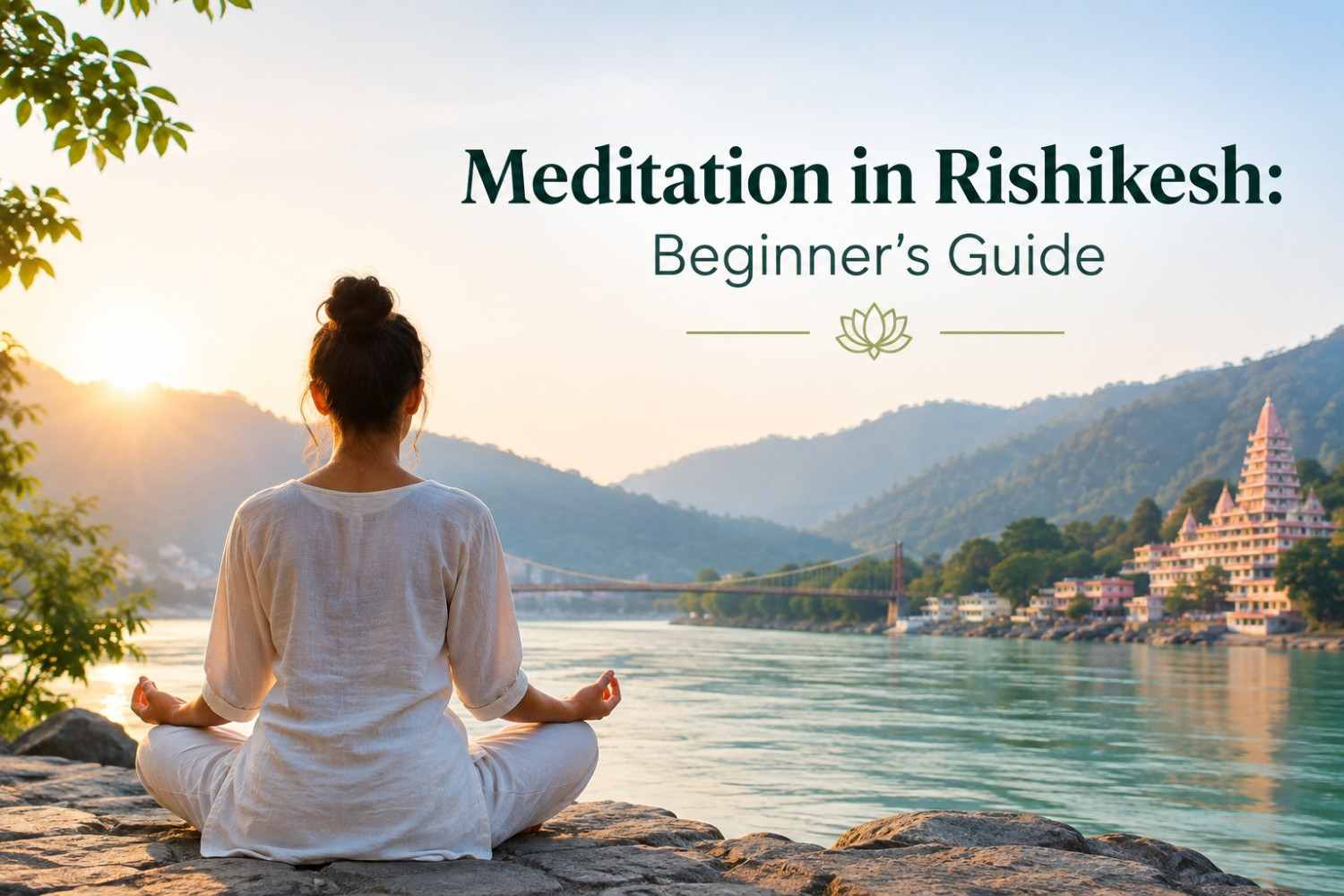
Meditation in Rishikesh gives beginners a chance to slow down, build awareness, and learn traditional and modern meditation practices in a peaceful setting. From guided sessions and mindfulness meditation to structured courses, ashrams, and retreats, Rishikesh offers different ways to begin a regular practice.
Whether you are completely new to meditation or want to deepen an existing practice, understanding what to expect can help you choose the right approach.
What Is Meditation?
Meditation is a practice of training attention and awareness. Depending on the technique, you may focus on your breathing, a mantra, physical sensations, sounds, or simply observe your thoughts without reacting to them.
For beginners, meditation does not mean stopping every thought. Instead, it is about learning to notice where your attention goes and gently bringing it back to the chosen point of focus.
Common approaches include mindfulness meditation, guided meditation, breathing practices, mantra meditation, and traditional contemplative practices.
Why Is Rishikesh Known for Meditation?
Rishikesh is widely associated with yoga, meditation, spiritual learning, and traditional Indian practices. Located in Uttarakhand near the foothills of the Himalayas and along the Ganga, the city attracts people interested in yoga, meditation, retreats, and personal development.
The environment can make it easier to establish a dedicated routine away from the distractions of everyday life. At the same time, beginners should remember that the quality of their experience depends more on the teacher, practice, consistency, and learning environment than on the location alone.
Rishikesh offers several ways to learn, including meditation centres, ashrams, yoga schools, private sessions, and residential retreats.
Is Meditation in Rishikesh Suitable for Beginners?
Yes. Beginners can learn meditation in Rishikesh without having previous experience.
Many introductory sessions begin with simple techniques such as awareness of the breath, body relaxation, concentration, or guided meditation. You do not need to be able to sit perfectly still or clear your mind before starting.
If you are new to meditation, look for a program that clearly explains its teaching approach, daily schedule, session duration, and level of guidance.
What Are the Benefits of Meditation?
Regular meditation may support relaxation, attention, self-awareness, and emotional well-being. The experience varies from person to person, and meditation should not be treated as a replacement for professional medical or mental-health care. Some commonly discussed meditation benefits include: Greater awareness of thoughts and emotions Improved ability to maintain attention A greater sense of calm and relaxation Better awareness of breathing and body sensations Development of a more consistent daily routine Increased self-reflection A greater understanding of one's reactions and habits The most meaningful benefits usually come from consistent practice rather than from a single meditation session.
Which Meditation Practices Can Beginners Try in Rishikesh?
There is no single meditation technique that is best for everyone. Your choice can depend on your experience, interests, schedule, and the type of guidance you prefer.
Mindfulness Meditation
Mindfulness meditation involves intentionally paying attention to the present moment. A beginner may focus on breathing, sounds, bodily sensations, or thoughts while practicing non-judgmental awareness.
It can be a simple starting point because it does not require complicated equipment or a particular belief system.
Guided Meditation
In guided meditation, a teacher or recorded voice leads you through the practice. You may be asked to focus on breathing, relax different parts of the body, visualize something, or observe your thoughts.
Guided meditation for beginners can be especially useful when you are unsure what to do during a meditation session.
Breathing Meditation
Breathing-based meditation uses the natural rhythm of the breath as an object of attention. Beginners can simply observe inhalation and exhalation rather than trying to control the breath.
Some traditional practices may involve specific breathing techniques, so beginners should learn them from a qualified instructor when instruction is required.
Morning Meditation
Morning meditation can be an easy way to establish consistency. Practicing before the day's activities become busy may help you create a regular routine.
Even a short session can be useful as a starting point. You can gradually increase the duration as the practice becomes more familiar.
Mantra Meditation
Mantra meditation uses the repetition or awareness of a sound, word, or phrase as a focus for attention. The method and meaning can vary between traditions, so beginners may benefit from learning the practice from an experienced teacher.
Vipassana Meditation
Vipassana meditation in Rishikesh generally refers to insight-oriented meditation practices involving careful observation of experience, such as bodily sensations, thoughts, and reactions.
Vipassana programs can vary considerably in format and intensity. Before joining an intensive course, beginners should understand the schedule, silence requirements, daily practice expectations, accommodation arrangements, and teacher guidance.
How to Meditate for Beginners
If you are wondering how to meditate for beginners, start with a simple practice rather than trying to achieve a particular mental state.
A Simple 10-Minute Meditation
1. Choose a quiet place.
Sit somewhere comfortable where you are unlikely to be interrupted.
2. Find a stable position.
You can sit on a cushion, chair, or another comfortable surface. You do not have to sit in a complicated posture.
3. Relax your body.
Allow your shoulders, face, hands, and jaw to soften while keeping your posture reasonably comfortable.
4. Notice your breathing.
Observe the natural movement of your breath without forcing it.
5. Notice distractions.
Thoughts, sounds, sensations, and emotions will naturally appear. You do not need to fight them.
6. Return to your focus.
When you notice that your attention has wandered, gently bring it back to the breath.
7. Finish gradually.
After several minutes, notice your body and surroundings before opening your eyes or getting up.
For a beginner, the goal is not to have an empty mind. The practice is the process of noticing and returning.
Yoga and Meditation in Rishikesh
Yoga and meditation in Rishikesh are often practiced together because they can complement one another.
A typical learning program may combine physical postures, breathing practices, relaxation, meditation, and philosophical study. However, the exact combination depends on the school or program.
If your main goal is meditation, check the curriculum before enrolling. Some programs may devote more time to physical yoga, while others may place greater emphasis on meditation and contemplative practices.
Where Can You Practice Meditation in Rishikesh?
Beginners have several options when looking for a place to practice.
Meditation Centres in Rishikesh
Meditation centres may offer individual sessions, group classes, workshops, or longer programs. Before attending, check the instructor's background, class format, duration, and whether the session is designed for beginners.
Meditation Ashrams in Rishikesh
A meditation ashram in Rishikesh can provide a more structured environment for spiritual and contemplative practice.
Ashram experiences can differ significantly. Some may follow a traditional daily schedule involving meditation, yoga, study, meals, and periods of silence. Others may provide shorter programs for visitors.
Research the daily routine and expectations before choosing an ashram stay.
Meditation Courses
A meditation course in Rishikesh may be suitable if you want systematic instruction rather than occasional sessions.
Courses can range from short introductory classes to longer residential programs. Look for clear information about the curriculum, teaching method, schedule, accommodation, and fees.
Meditation Retreats
A meditation retreat in Rishikesh is generally more immersive than attending a single class. Retreats may include several daily sessions, periods of reflection, yoga or breathing practices, and structured downtime.
A retreat can be useful when you want dedicated time away from your normal routine, but it is important to choose a program that matches your experience and expectations.
Meditation Course vs Meditation Retreat: Which Is Better?
The right choice depends on your goal.
If you are completely new, a short beginner course or guided session can be a comfortable starting point. If you want an immersive experience, a retreat may be more appropriate.
How to Choose a Meditation Centre or Course in Rishikesh
Choosing the right program is more important than simply selecting the most popular option.
Before booking, consider:
1. Teaching Experience
Look for information about the instructor's training, experience, and teaching background.
2. Beginner Support
Check whether the program explicitly welcomes people without previous meditation experience.
3. Daily Schedule
Understand how many sessions take place each day and how much time is dedicated to meditation.
4. Teaching Approach
Find out whether the program focuses on mindfulness, traditional meditation, Vipassana, mantra, guided practices, or a combination of methods.
5. Group Size
Smaller groups may provide more opportunities to ask questions, while larger groups can offer a different community experience.
6. Accommodation and Food
For residential programs, check what is included in the package and what type of accommodation is provided.
7. Reviews and Transparency
Look for genuine participant feedback and clear information about fees, schedules, policies, and what the program includes.
8. Your Personal Goal
Decide whether you want to relax, learn a technique, establish a daily practice, explore traditional teachings, or spend dedicated time on personal reflection.
What Should Beginners Expect During a Meditation Program?
Every school, centre, course, and retreat is different, but a beginner-oriented program may include:
Guided meditation sessions
Breathing awareness
Mindfulness practices
Quiet sitting
Gentle yoga or movement
Time for reflection
Teacher explanations
Group discussions
Periods of silence
A structured daily routine
You may also experience restlessness, wandering thoughts, physical discomfort, or difficulty concentrating during your first sessions. These experiences are common when learning to sit with sustained attention.
The goal is not to force yourself into stillness. A good beginner program should teach you how to work with distractions gradually.
How Long Should Beginners Meditate?
There is no universal meditation duration that every beginner needs to follow.
Starting with 5 to 10 minutes can make the practice easier to maintain. Once you become comfortable, you can gradually extend your sessions if it feels appropriate.
Consistency is generally more practical for beginners than trying to meditate for a long period once and then stopping.
When Is the Best Time to Meditate in Rishikesh?
Many people prefer early morning or evening because these periods can be quieter and easier to incorporate into a routine.
Morning meditation can be particularly convenient before sightseeing, classes, work, or other activities begin.
However, the best time is ultimately the time you can practice consistently. If your schedule is busy in the morning, a short evening session can still be a meaningful part of your routine.
What Should You Bring to a Meditation Session?
For a basic meditation session, you usually need very little.
Consider bringing:
Comfortable clothing
A light layer for cooler mornings or evenings
A water bottle
Personal essentials
A small notebook if you like recording reflections
Many organised programs provide meditation cushions or mats, but this varies by centre, so check beforehand.
For residential retreats, review the provider's packing list before travelling.
Is Meditation in Rishikesh Only for Spiritual People?
No. People approach meditation for many different reasons.
Some are interested in traditional Indian philosophy and spiritual practices, while others simply want to learn mindfulness, develop a regular meditation routine, or experience a quieter environment.
You do not need to adopt a particular lifestyle or belief system simply to learn a meditation technique. However, specific ashrams and traditional programs may have their own practices, rules, and expectations.
Understanding these differences before enrolling can help you choose an experience that suits you.
How to Make the Most of Your Meditation Experience in Rishikesh
If you are travelling to Rishikesh specifically to learn meditation, give yourself enough time to settle into the environment.
A few practical suggestions can help:
Begin with realistic expectations.
Choose a program appropriate for your experience level.
Follow the teacher's instructions carefully.
Avoid comparing your experience with other participants.
Keep your practice consistent.
Allow time for rest and reflection.
Ask questions when a technique is unclear.
Research the centre or retreat before booking.
Respect the rules of the place where you are practising.
Most importantly, do not feel that you need to have a dramatic spiritual experience. Meditation is a practice of attention and awareness, and its effects can be subtle.
Frequently Asked Questions
Is Rishikesh good for meditation?
Yes. Rishikesh offers a wide range of meditation classes, courses, ashrams, and retreats, making it possible for beginners and experienced practitioners to find different learning environments. The best option depends on your goals, preferred tradition, schedule, and level of experience.
Can beginners learn meditation in Rishikesh?
Yes. Beginners can start with guided meditation, mindfulness, breathing awareness, or introductory courses. Previous experience is generally not required for beginner-oriented programs.
How do I start meditation as a beginner?
Start with 5–10 minutes in a quiet place. Sit comfortably, observe your natural breathing, notice when your attention wanders, and gently return your attention to the breath.
Which meditation is best for beginners?
There is no single meditation technique that is best for everyone. Guided meditation and simple mindfulness or breath-awareness practices are often approachable starting points because they provide a clear focus and can be practiced without complicated equipment.
What are the main meditation benefits?
Meditation may support relaxation, attention, self-awareness, and emotional well-being. Results vary between individuals and generally depend on the type and consistency of practice.
Where can I learn meditation in Rishikesh?
You can explore meditation centres, yoga schools, ashrams, private classes, meditation courses, and residential retreats in Rishikesh. Compare the teacher's experience, teaching approach, schedule, facilities, and beginner suitability before choosing.
What is Vipassana meditation in Rishikesh?
Vipassana generally refers to an insight-oriented meditation approach involving careful observation of experience. Specific programs can differ, so beginners should check the schedule, rules, teaching method, and practice requirements before joining.
How long should a beginner meditate?
Starting with 5–10 minutes can be practical for beginners. As your practice becomes familiar, you can gradually increase the duration according to your comfort and goals.
Do I need to stay in an ashram to meditate in Rishikesh?
No. Staying in a meditation ashram is only one option. You can also attend individual classes, guided sessions, courses, retreats, or practice independently.
Final Thoughts
Meditation in Rishikesh can be a meaningful way for beginners to learn the fundamentals of awareness and establish a regular practice. The city offers different learning environments, from short guided sessions and meditation centres to structured courses, ashrams, and immersive retreats.
If you are new to meditation, start simply. Choose a method you understand, learn from a credible teacher, practice consistently, and give yourself time to develop familiarity with the process.
Rishikesh can provide the setting, but your regular practice is what ultimately shapes your meditation journey.