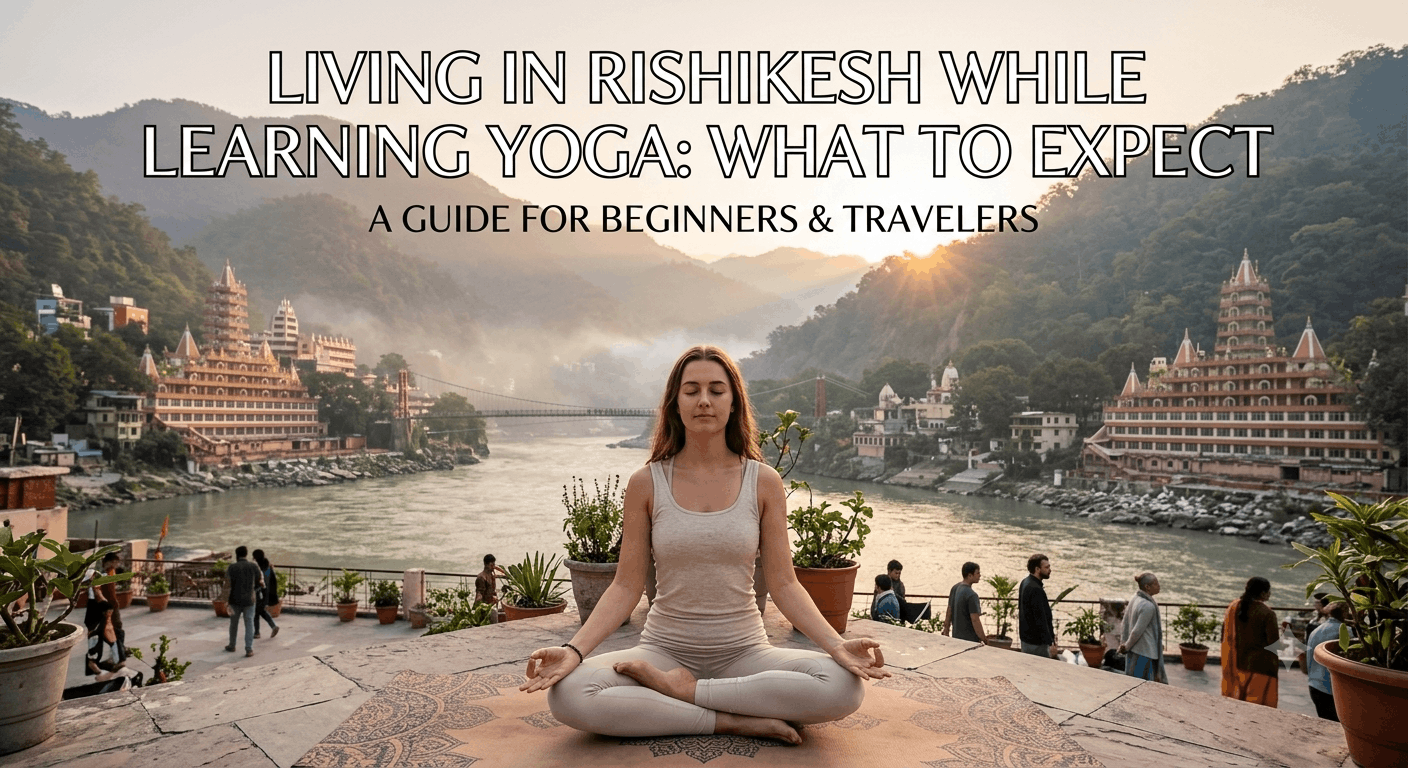
Rishikesh is For More Than Just Students Of Yoga teacher training In Rishikesh is a place that has been attracting travellers for years, not just yoga students. The truth is that it attracts anyone who wishes to slow down life, meditate, practice yoga, connect with oneself, and learn how to live a spiritual life. You may find people from all around the world who are coming here just to get in touch with themselves and with the Ganges, which is also the holy river that surrounds the holy place of Rishikesh. If you think about the possibility of moving to Rishikesh and getting in touch with yoga, moving here will be quite different compared to visiting it only once a week.
Your days in Rishikesh would surely be dedicated to early morning yoga classes, meditation time, eating healthy food, attending lectures on yogic knowledge, spending time visiting the various temples in Rishikesh, and maybe sitting in the early evening on the riverbanks.
Other than that, you will need to address daily challenges like knowing about accommodation prices, the weather, food, the means of transportation, as well as local habits. So, what does the life experience in Rishikesh whilst studying yoga really look like?
Why Choose Rishikesh to Learn Yoga?
The global yoga community considers India the most important and cherished yoga centre. Rishikesh has since held the spiritual tradition with utmost reverence and has attracted innumerable seekers with a vision to immerse in the study of yoga for life. The foremost benefit of visiting a yoga study place like this one – here, in Rishikesh is that this does not restrict yoga just to a ‘class ’, but it integrates into your life.
For example, in the morning we might wake early – you will start to do some pranayama /meditation, maybe attend a first asana class followed by an enriched breakfast, followed by an intensive 3 hours of either yoga anatomy/ philosophy, then walking down the river to visit temples, read books.
You become a disciplined person as people, or rather nature itself, is so conscious- the atmosphere compels you to stay conscious- minded as well – the very spirit of yoga practice.
What Is Daily Life Like in Rishikesh?
Rishikesh feels very slow paced and is much less frantic than Indian major cities. If you are living in Rishikesh and studying yoga you'll be very aware that most people make their lives revolve around the spiritualism practiced there. An early Rishikesh morning holds a quiet magic... Ringing temple bells, the sound of birds chirping, the flow of the river and the inhabitants waking, to it all. Guesthouses and schools in Rishikesh are also advantageous as the majority are located within walking distance of schools, cafes, markets, temples and certainly the river. Your routine could look something like this: 5:30–6:00 AM: Wake up 6:30 AM: Meditation or pranayama 7:00–9:00 AM: Yoga practice 9:00 AM: Breakfast 10:00 AM–1:00 PM: Yoga theory or free time 1:00 PM: Lunch Afternoon: Study, rest, explore, or attend workshops Evening: Meditation, Ganga Aarti, walking, or socializing Night: Dinner and relaxation Of course, your schedule depends on whether you are attending a yoga teacher training course, staying at an ashram, or practicing independently.
Is Rishikesh a Good Place to Live?
Is Rishikesh a good place to live?
This is a very commonly asked question amongst people considering coming to Rishikesh for yoga. Well, for most people, yes, it is.
But the answer really depends on what your idea of a good place to live is.
It could be a wonderful temporary place to live for some people if you are a nature lover, spiritually minded, prefer a simple lifestyle, vegetarianism, yoga, a slower pace, and have connections with the large expat community that has settled here (particularly in areas visited by yogi expats). But be prepared for a learning curve and for not everything to be as convenient as it may be in the city in other parts of the world.
Accommodation While Learning Yoga
Your choice of accommodation can significantly affect your experience.
Yoga students generally have several options, including:
Ashram Living
Ashram lodging could be great if the primary aim is spirituality or disciplined practice. Various ashrams offer lodging and meals as part of the routine.
The life would entail pre-set meal times, early mornings, meditations, yoga lessons and limitations in few areas.
Yoga School Accommodation
Several yoga teacher training courses provide accommodation. Convenient for you since you won’t have to travel to and from home or back to the classes.
Plus it lets you experience living with students similar to yourself.
Guesthouses and Hostels
Guesthouses and hostels provide more independence and can be suitable for students who want to explore Rishikesh outside their course schedule.
Private Apartments
If you plan to stay for several months, renting a private room or apartment may provide greater comfort and privacy. However, availability and prices vary considerably depending on location, season, and amenities.
How Much Does It Cost to Learn Yoga in Rishikesh?
What amount does it take to learn yoga in Rishikesh? What is the approximate expense? I question, “This isn’t something that we will answer, because the expense isn’t solely identified with how great a teacher you are learning with, whether the program is residential or not, or what length of.
Just short yoga courses, or do you go through weeks here learning and practising everything you get into Yoga? I, for example, spent under two weeks here doing yoga and was thinking of getting my own Teacher Training.
You should also budget separately for everyday expenses such as:
Accommodation
Food and drinks
Local transportation
Laundry
Personal shopping
Internet or mobile data
Weekend trips
Workshops and additional classes
Travel insurance
One positive aspect of Rishikesh is that it is relatively easy to work out how your budget works. Students opting for a simpler style of accommodation and more basic meals can get by with far less than those opting for more upmarket, international-style cafes and regular day trips out.
Be sure to know exactly what's covered by your course fee before you sign up.
Common Asked Questions
1. Is Rishikesh a good place to live while learning yoga?
Yes. Rishikesh can be an excellent place to live while learning yoga, especially if you enjoy nature, meditation, spirituality, vegetarian food, and a slower lifestyle. Living there allows you to make yoga part of your daily routine rather than treating it as a short-term activity.
2. What is daily life like for a yoga student in Rishikesh?
Daily life often starts early with meditation, pranayama, and yoga practice. The rest of the day may include yoga philosophy, anatomy classes, workshops, self-study, healthy meals, and time to explore temples or relax beside the Ganges. Your exact routine will depend on your yoga school or course.
3. Where can I stay while learning yoga in Rishikesh?
Yoga students can choose from ashrams, yoga school accommodation, guesthouses, hostels, and private apartments. Ashrams and yoga schools generally provide a more structured lifestyle, while guesthouses and private rentals offer greater independence and privacy.
4. How much does it cost to learn yoga in Rishikesh?
The cost varies depending on the course, duration, accommodation, meals, and facilities included. In addition to course fees, you should budget for accommodation, food, transportation, laundry, internet, personal expenses, workshops, trips, and travel insurance. Always check what is included in your yoga program before enrolling.
5. What should I expect when living in Rishikesh?
You can expect a peaceful but lively environment, an international community, early mornings, vegetarian food, spiritual activities, and plenty of opportunities to practice yoga and meditation. You should also be prepared for hot summers, heavy monsoon rainfall, heavy traffic in some areas, and differences in infrastructure compared with larger Western cities.