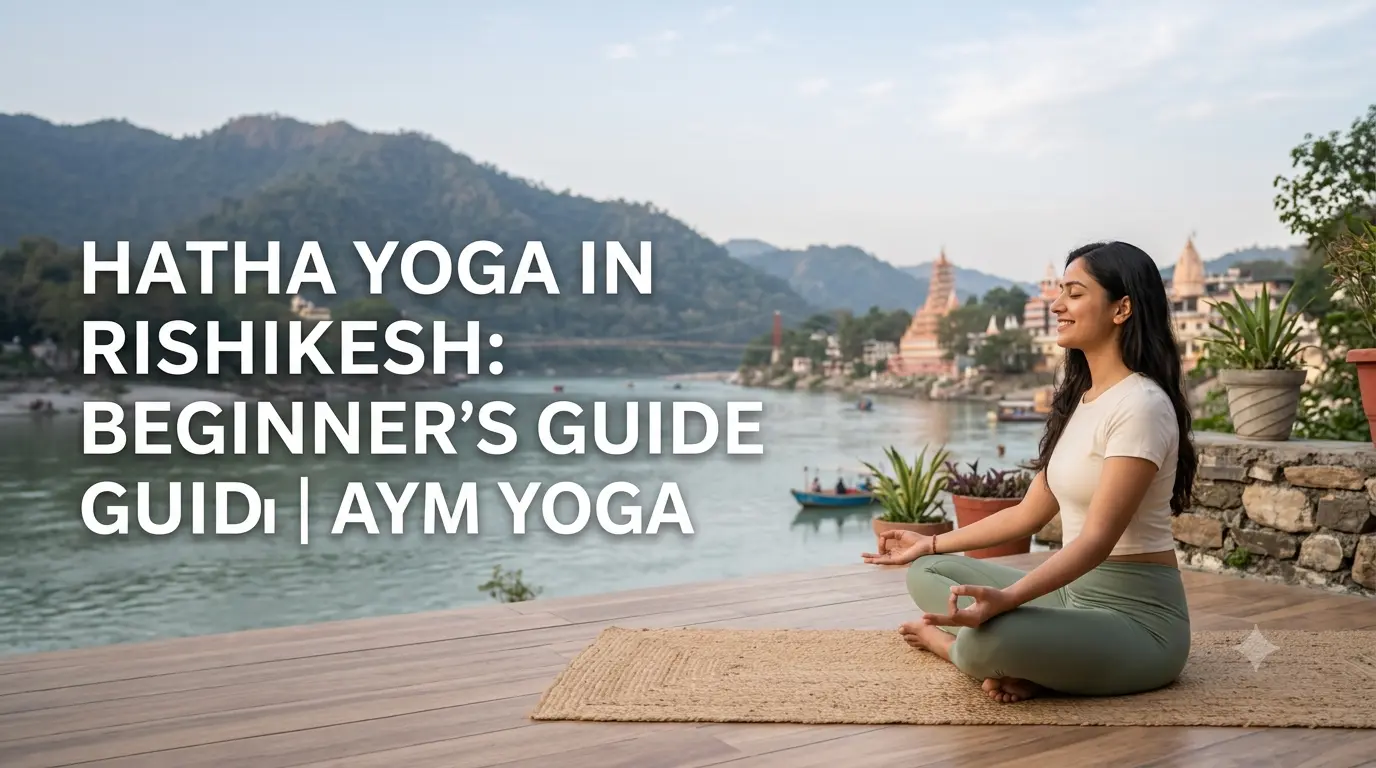
If you are new to yoga and want to build a strong foundation, Hatha Yoga in Rishikesh can be a meaningful place to begin. Rather than rushing through difficult sequences, Hatha Yoga gives beginners time to understand posture, alignment, breathing, awareness, and relaxation.
Rishikesh, located in Uttarakhand beside the Ganga and at the foothills of the Himalayas, has become an important destination for people who want to study yoga in India. The city offers everything from drop-in Hatha Yoga classes in Rishikesh to structured residential courses and yoga teacher training programs.
But choosing the right class or Hatha Yoga school in Rishikesh can be confusing, especially if you have never practiced before.
This guide explains what Hatha Yoga is, why beginners choose it, what you can expect from a class, its potential benefits, beginner-friendly poses and breathing practices, course options, fees, safety considerations, and how to choose a suitable school.
Hatha Yoga is a foundational approach to yoga that commonly combines physical postures (asanas), breathing practices (pranayama), relaxation and meditation. It can be suitable for beginners when practices are appropriately adapted to their experience and physical needs.
Table of Contents
What Is Hatha Yoga?
Hatha Yoga is a broad traditional approach to yoga that places significant emphasis on physical practices, including asana and pranayama, as well as on practices intended to cultivate concentration and awareness.
In modern yoga settings, the word Hatha is often used for classes that move at a measured pace and allow students time to explore individual postures rather than continuously flowing from one movement to another.
However, Hatha Yoga is more than physical stretching.
A well-structured practice may bring together:
Asana or physical postures
Pranayama or breath regulation
Relaxation
Concentration
Meditation
Yogic philosophy
Awareness of the body and breath
Yoga itself has roots in Indian philosophical and spiritual traditions. Modern classes may emphasise different elements depending on the school, teacher, lineage, and the program's purpose. The National Centre for Complementary and Integrative Health describes yoga as a practice that can include physical postures, breathing techniques and meditation.
What Does “Hatha” Mean?
The word Hatha is traditionally interpreted in yogic literature in different ways, and the familiar “sun and moon” explanation is commonly used in modern yoga teaching.
Rather than treating the term as simply a literal translation, beginners can understand Hatha Yoga as a practice concerned with developing steadiness, awareness and balance through disciplined physical and mental practices.
Why Choose Hatha Yoga in Rishikesh?
For a beginner, learning in Rishikesh can provide an opportunity to combine yoga practice with an immersive cultural experience.
One advantage of studying in person is direct guidance. A teacher can demonstrate a posture, observe your technique and offer an appropriate modification when necessary.
The environment can also encourage consistency. Instead of trying to fit a short practice between work and other responsibilities, a residential Hatha Yoga course in Rishikesh may give you a structured daily routine.
At AYM Yoga School, the school's current information states that it is registered with Yoga Alliance, USA and the Yoga Certification Board, Ministry of Ayush, Government of India, and offers yoga teacher training programs in Rishikesh.
For anyone comparing schools, however, the registration or certification claim should always be checked against the school's current official information before enrolling.
Is Hatha Yoga Good for Beginners?
Yes, Hatha Yoga can be a suitable starting point for beginners, particularly when the class is designed for their experience level.
You do not need to be highly flexible before your first class.
A beginner-friendly teacher should help you understand:
How to enter and leave basic postures
Where to place your hands and feet
How to coordinate movement with breathing
When to modify a posture
How to use props when appropriate
How to relax without forcing the body
How to develop a sustainable practice
The goal is not to perform the most advanced pose in the room.
The goal is to develop a foundation that you can safely build on.
What Happens in a Hatha Yoga Class?
A typical Hatha Yoga class can vary considerably from one school to another, but a beginner-friendly session may include several of the following elements:
1. Centring and Breath Awareness
The session may begin with quiet sitting, natural breathing, or a short meditation to help you become aware of your body and breath.
2. Warm-Up and Preparatory Movements
Gentle movements can prepare the joints and muscles for physical practice.
3. Asana Practice
The teacher introduces selected postures and explains alignment, breathing and modifications.
4. Pranayama
Depending on the level of the class, the teacher may introduce simple breathing practices.
5. Relaxation or Meditation
The class may finish with relaxation, Savasana or a short meditation.
The exact sequence depends on the teacher and tradition. There is no single universal Hatha Yoga class format.
What Are the Benefits of Hatha Yoga?
Hatha Yoga may support several aspects of physical and mental wellbeing, although individual results vary.
Research on yoga overall suggests potential benefits related to stress management, mental and emotional wellbeing, sleep, balance and some types of pain. NCCIH also emphasises that different yoga styles and research protocols vary, so findings should not automatically be attributed to every form of yoga.
5 Key Benefits of Hatha Yoga for Beginners
1. Improved Flexibility and Mobility
Regular movement through an appropriate range can help you become more comfortable with everyday movement.
You do not need to force flexibility. A good beginner practice focuses on gradual progress and body awareness.
2. Building Functional Strength
Hatha postures can challenge the legs, core, shoulders and other muscle groups.
Holding a posture with controlled breathing can also help you develop awareness of how your body is positioned.
3. Better Body Awareness
One of the most valuable beginner skills is learning to notice the difference between productive effort and excessive strain.
Hatha Yoga gives students time to observe posture, breathing and physical sensations rather than simply moving quickly between poses.
4. Stress Management and Relaxation
Breathing, concentration and relaxation practices can contribute to a calmer practice environment.
Research on yoga suggests possible benefits for stress management and mental/emotional wellbeing, although yoga should not be presented as a substitute for professional medical or mental-health treatment.
5. Greater Concentration and Mindfulness
Staying with a posture, observing the breath and practising stillness can encourage present-moment awareness.
A systematic review specifically examining Hatha Yoga and executive function found promising evidence in several populations, although the researchers also noted limitations and variation among studies.
Essential Hatha Yoga Poses for Beginners
A beginner does not need dozens of poses.
It is more useful to learn a smaller selection correctly and understand how your body responds.
Tadasana - Mountain Pose
Tadasana teaches basic standing alignment and awareness.
Beginner approach:
Stand comfortably with your feet grounded.
Keep your spine naturally lengthened.
Relax unnecessary tension in your shoulders.
Allow your breath to remain steady.
Notice how your weight is distributed between your feet.
Balasana - Child’s Pose
A child's Pose is often used as a resting or restorative position.
It can provide a comfortable opportunity to slow down and reconnect with the breath.
Use a cushion or folded blanket if needed.
Adho Mukha Svanasana - Downward-Facing Dog
Downward-Facing Dog involves the arms, shoulders, hips and legs.
Beginners do not need to force their heels toward the floor. Keeping the knees slightly bent can make the posture more accessible.
Virabhadrasana I - Warrior I
I can help beginners explore standing strength, balance and coordination.
The exact position of the feet and hips can vary depending on the teacher's approach and the student's body.
Savasana - Corpse Pose
Savasana is traditionally practised at the end of many yoga sessions.
Rather than treating it as simply “lying down,” use it as an opportunity to release muscular effort and observe the breath.
Hatha Yoga and Pranayama for Beginners
Breathing is an important component of many Hatha Yoga practices.
For beginners, pranayama should be introduced gradually and taught by a qualified instructor, particularly when techniques involve breath retention or forceful breathing.
Simple Breath Awareness
Start with comfortable, natural breathing.
Notice:
The pace of the breath
Movement of the abdomen and rib cage
Whether you are unnecessarily holding your breath
Whether your breathing remains comfortable
Nadi Shodhana
Alternate-nostril breathing is traditionally practised as a balancing and concentration-oriented technique.
A beginner should first learn the basic technique without forcing the breath or adding long breath retentions.
Ujjayi Breathing
Ujjayi is often taught with a gentle narrowing of the throat that creates a soft audible quality to the breath.
It should remain comfortable rather than strained.
Important: If a breathing technique causes dizziness, discomfort or distress, stop and return to normal breathing.
Hatha Yoga vs Vinyasa and Ashtanga Yoga
Beginners often search for the difference between Hatha, Vinyasa and Ashtanga Yoga.
The simplest distinction is the style of practice rather than a claim that one is universally “better.”
The experience depends heavily on the teacher and school.
A slow Hatha class can still be challenging, while an experienced teacher can adapt a more dynamic practice for different students.
Hatha Yoga Classes in Rishikesh
If you are visiting Rishikesh for only a few days, a Hatha Yoga class in Rishikesh may be the simplest way to experience the practice before committing to a longer course.
When comparing classes, look at:
Class duration
Teacher experience
Beginner suitability
Class size
Teaching style
Alignment instruction
Availability of modifications
Location
Whether props are provided
What is included in the fee
Do not choose a class only because its listing says “best.”
Look for evidence of what makes the class suitable for your needs.
Hatha Yoga Course in Rishikesh
A structured Hatha Yoga course in Rishikesh can be a better option if you want progression rather than a one-time experience.
A course may allow you to study:
Foundational asanas
Alignment
Pranayama
Meditation
Relaxation
Yoga philosophy
Basic anatomy
Yogic lifestyle
Personal practice
The curriculum varies between schools, so read the syllabus before booking.
Hatha Yoga Teacher Training in Rishikesh
If your goal goes beyond personal practice, you may consider Hatha Yoga teacher training in Rishikesh.
Teacher training is different from attending a regular yoga class.
A proper teacher-training curriculum can include:
Asana practice
Teaching methodology
Anatomy and physiology
Pranayama
Meditation
Yoga philosophy
Ethics
Sequencing
Practice teaching
Adjustments and modifications
For schools registered with Yoga Alliance, the RYS 200 framework includes areas such as Techniques, Training and Practice; Anatomy and Physiology; Yoga Humanities; and Professional Essentials.
This is why beginners comparing a teacher-training program should examine the actual curriculum rather than choosing solely on course duration or marketing language.
Hatha Yoga TTC in Rishikesh: Is It Right for You?
A Hatha Yoga TTC in Rishikesh may be appropriate if you want structured study and potentially intend to pursue teaching.
Before enrolling, ask yourself:
Do I want personal development or professional teaching preparation?
Can I commit to the daily schedule?
Does the curriculum match my goals?
What experience level does the school recommend?
Who teaches the program?
What certification is issued?
Is the school currently registered with the organization it claims to be affiliated with?
What is included in the published fee?
A 200-hour registered teacher-training program has defined curriculum requirements under Yoga Alliance's standards.
Hatha Yoga in Rishikesh Fees
The cost of Hatha Yoga in Rishikesh varies depending on what you are booking.
A drop-in class, short course, residential program and teacher training should not be compared as if they were the same product.
Fees can depend on:
Number of training hours
Course duration
Accommodation
Room type
Meals
Teacher experience
Class size
Certification
Course materials
Additional activities
Season and batch dates
What Should You Check Before Paying?
Do not look only at the headline price.
Ask whether the fee includes:
Yoga sessions
Accommodation
Meals
Course materials
Certification
Excursions
Airport or railway transfers
Additional workshops
Taxes or other charges
For current AYM Yoga School fees, students should check the relevant program page or contact the school directly because prices and inclusions can change.
How to Choose the Best Hatha Yoga School in Rishikesh
Searching for the best Hatha Yoga school in Rishikesh can produce many results.
Instead of relying on a “best” label, compare schools using practical criteria.
1. Check the Curriculum
A good program should clearly explain what you will study.
Look for a balance between practice and theory rather than a page filled only with promotional claims.
2. Research the Teachers
Look for information about:
Qualifications
Teaching experience
Areas of specialization
Training background
Current teaching role
3. Verify Registration or Certification Claims
If a school claims Yoga Alliance registration, verify its current status through the appropriate official source.
AYM Yoga School currently states that it is registered with Yoga Alliance, USA and the Yoga Certification Board, Ministry of Ayush, Government of India.
4. Read Recent Student Reviews
Reviews can help you understand:
Teaching quality
Accommodation
Food
Schedule
Communication
Overall student experience
Look for detailed reviews rather than relying only on star ratings.
5. Ask About Class Size
Smaller groups may allow more individual interaction, but class size should be considered alongside teacher quality and curriculum.
6. Understand What the Fee Includes
A low headline price may not represent the final cost if accommodation, meals or certification are charged separately.
What to Look for in a Hatha Yoga Teacher
A good Hatha Yoga teacher should do more than demonstrate advanced postures.
For beginners, look for a teacher who:
Explains postures clearly
Provides appropriate modifications
Encourages students not to force movements
Pays attention to alignment
Explains breathing clearly
Welcomes questions
Respects individual limitations
Understands when a practice should be modified
A teacher who encourages you to compete with other students may not be the best fit for a beginner.
Yoga is not a flexibility competition.
What to Expect From a Hatha Yoga School in Rishikesh
A residential Hatha Yoga school in Rishikesh may offer a more immersive routine than a standard local class.
Depending on the program, your day may include:
Morning asana practice
Pranayama
Meditation
Breakfast
Philosophy or anatomy
Afternoon study
Evening practice
Personal study
Rest
However, every school has its own timetable.
Before enrolling, ask for the current daily schedule so you know how intensive the experience will be.
Hatha Yoga Ashram in Rishikesh vs Yoga School
You may also come across the phrase Hatha Yoga ashram in Rishikesh when researching where to study.
Although the terms are sometimes used interchangeably in travel and marketing, an ashram and a yoga school can have different approaches.
An ashram may emphasize:
Simpler living
Spiritual discipline
Meditation
Service
Traditional study
Community living
A yoga school may place more emphasis on:
Structured courses
Teacher training
Certification
Anatomy
Teaching methodology
Scheduled classes
Neither is automatically better.
The right choice depends on what you want from your stay.
Tips for Your First Hatha Yoga Class in Rishikesh
If this is your first class, a little preparation can make the experience easier.
Arrive Early
Give yourself enough time to find the studio, settle in and speak with the teacher.
Wear Comfortable Clothing
Choose clothing that allows unrestricted movement without requiring constant adjustment.
Avoid Practicing on a Very Full Stomach
Give your body enough time to digest before a physical class.
Tell the Teacher You Are New
This allows the teacher to suggest appropriate modifications.
Do Not Compare Yourself With Other Students
Rishikesh attracts practitioners with very different levels of experience.
Your first class is not a test.
Bring Questions
If you are unsure about alignment, breathing or modifications, ask
Common Mistakes Beginners Should Avoid
Forcing Flexibility
Stretching should not become a competition.
Holding Your Breath
Breathing should generally remain smooth and appropriate for the posture unless a specific technique is being taught.
Copying Advanced Students
An advanced practitioner may have years of experience. Their range of movement is not a benchmark for you.
Ignoring Pain
Discomfort from effort and pain are not the same thing. Stop and ask the teacher if something feels wrong.
Practising Advanced Techniques Without Guidance
Beginners should not jump into challenging inversions, extreme flexibility work or forceful breathing simply because they see others doing them.
NCCIH notes that yoga is generally considered safe for healthy people when practiced appropriately, but injuries can still occur. It recommends qualified instruction and additional caution for people who are pregnant, older, or have health conditions.
Is Hatha Yoga Safe for Beginners?
For many healthy people, appropriately taught yoga can be a safe form of physical activity.
However, “beginner-friendly” does not mean every posture or breathing technique is suitable for every person.
If you have an injury, medical condition, are pregnant, or have another specific health concern, discuss appropriate modifications with your healthcare professional and inform your yoga teacher.
Stop a practice if you experience significant pain, dizziness, difficulty breathing or other concerning symptoms.
The purpose of a beginner class is to build awareness—not to push through warning signs.
Frequently Asked Questions
What is Hatha Yoga in Rishikesh?
What is Hatha Yoga in Rishikesh?
Hatha Yoga in Rishikesh refers to Hatha Yoga classes for beginners, courses and training programs offered in Rishikesh. These may include asana, pranayama, meditation, relaxation and elements of yoga philosophy, depending on the school.
Is Hatha Yoga suitable for complete beginners?
Yes. Hatha Yoga can be a suitable starting point because many classes give students time to learn individual postures, breathing and alignment. Choose a class specifically designed for your experience level.
What are the 5 benefits of Hatha Yoga?
Five commonly discussed benefits are improved flexibility and mobility, physical strength, body awareness, stress management and improved concentration. Research supports potential wellness benefits of yoga, but individual outcomes vary.
Do I need to be flexible to practice Hatha Yoga?
No. Flexibility is not a prerequisite. A beginner class should offer modifications so students can practice according to their current ability.
How often should a beginner practice Hatha Yoga?
A sustainable routine is more important than trying to practice for long hours immediately. Start with a manageable schedule and gradually build consistency.
How much do Hatha Yoga classes cost in Rishikesh?
There is no single price. Fees vary according to class duration, course length, accommodation, meals, teacher training, certification and other inclusions. Always check the current fee directly with the school.
What is the difference between Hatha Yoga and Vinyasa Yoga?
Hatha classes commonly give more time to individual postures and controlled practice, while Vinyasa generally emphasizes flowing sequences in which movement is coordinated with breath. The exact teaching style varies by instructor.
Can I join a Hatha Yoga teacher training course without being flexible?
Yes, flexibility is not the same as teaching ability. However, each school can have its own recommended experience level and admission requirements, so check the specific program before enrolling.
Is a Hatha Yoga TTC the same as a regular Hatha Yoga class?
No. A regular class is primarily a practice session. A teacher-training course combines personal practice with subjects such as teaching methodology, anatomy, philosophy, pranayama and practice teaching.
How do I choose the best Hatha Yoga teacher in Rishikesh?
Look beyond marketing claims. Check the teacher's training, experience, teaching approach, student feedback and ability to adapt practices for different experience levels.
Can I learn Hatha Yoga at home?
Yes, beginners can use reputable online resources to learn basic practices, but in-person instruction can be valuable for learning alignment, modifications and breathing techniques safely.
Why Consider AYM Yoga School in Rishikesh?
If you are comparing Hatha Yoga schools in Rishikesh, AYM Yoga School is one option to research.
AYM's official website currently states that the school is based in Upper Tapovan, Rishikesh, and is registered with Yoga Alliance, USA and the Yoga Certification Board, Ministry of Ayush, Government of India. Its listed programs include 100-hour, 200-hour, 300-hour and 500-hour teacher training, along with other yoga programs.
The school also describes its approach as incorporating asana, pranayama, meditation and classical yoga teachings.
If you are interested in studying at AYM, review the current course curriculum, dates, accommodation options, fees and certification details before making a decision.
A Simple Beginner Path for Learning Hatha Yoga in Rishikesh
If you are unsure where to start, you can use this simple progression:
Step 1: Experience a class
Try a beginner-friendly Hatha session to understand the teaching style.
Step 2: Build consistency
If you enjoy the practice, follow a structured routine rather than constantly changing styles.
Step 3: Learn the foundations
Focus on basic asana, breathing, alignment and relaxation.
Step 4: Explore yoga philosophy
Understand that yoga is broader than physical postures.
Step 5: Choose a longer course if needed
If you want deeper study, consider a structured Hatha Yoga course or teacher training program.
Step 6: Compare schools carefully
Review teachers, curriculum, certification, fees, accommodation and student feedback before enrolling.
Final Thoughts
Hatha Yoga in Rishikesh can be an excellent starting point for someone who wants to approach yoga gradually and thoughtfully.
The most important thing is not finding the school that calls itself the “best.” It is finding a teacher and learning environment that matches your experience, goals, budget and expectations.
For beginners, prioritise clear instruction, appropriate modifications, a transparent curriculum and a safe learning environment.
Whether you choose a single Hatha Yoga class in Rishikesh, a short course, a residential program or Hatha Yoga teacher training in Rishikesh, start with the same principle: learn the foundations first, practice consistently, and allow your understanding to develop over time.
If you are considering AYM Yoga School, explore the current programs and speak with the school directly about course dates, fees, eligibility and what is included before booking your place.